Our Textile Wastewater Solution

Water-intensive colouring and finishing operations inevitably leave high-volume wash streams loaded with synthetic dyes and refractory COD. Even after primary and biological treatment, residual colour and recalcitrant organic compounds can remain in the wastewater, limiting opportunities for compliant discharge or water reuse.

Arvia works with textile manufacturers to target these residual contaminants using Nyex™ advanced water treatment technology. Our systems are designed for tertiary polishing and can also be positioned earlier in the treatment train where specific organics need to be removed before biological treatment, membranes or other downstream processes.

This gives manufacturers a practical route to improving organic effluent quality where additional polishing is required.

For textile manufacturers, this provides a practical polishing step for reducing residual colour and COD while supporting discharge, water reuse objectives. Talk to a specialist today.

03.31.2021

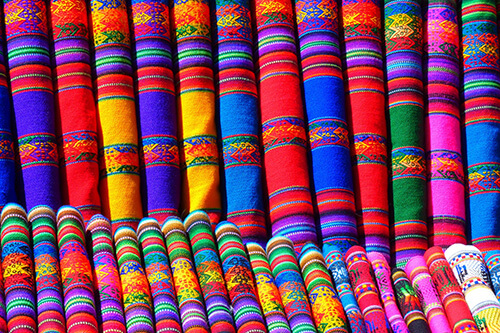
Colourful rolls of fabric stacked neatly
CASE STUDY: Removal of Chemical Dye from Textile Wastewater

Reduction of colour from 1755 Pt-Co Apparent to less than 150, visually completely removed.

Water Treatment Services for Textile Manufacturing

Residual Colour Removal

Dyeing and finishing processes can leave colour in wastewater even after conventional treatment. Nyex™ provides targeted polishing to reduce residual colour-causing organic compounds, supporting the water quality requirements of downstream treatment, discharge or reuse.

COD Polishing and Process Protection

Textile wastewater may retain difficult organic load after biological treatment, including compounds associated with dyes and finishing chemistry. Nyex™ can reduce this residual COD and remove problematic organics before they place additional pressure on downstream membranes or biological processes.

Water reuse for ZLD and ZDHC

Textile production is highly water intensive, making treated-water quality critical to reuse strategies. Nyex™ can provide the final polishing required to improve colour and organic contaminant levels where reuse, Zero Liquid Discharge or ZDHC objectives demand higher-quality treated water.

Why choose a Nyex water treatment process?

Textile wastewater varies with dye recipes, finishing chemistry and production batches. Nyex™ provides flexible polishing for the residual colour and organic load that can remain after conventional treatment.

  1. Residual colour reduction: Nyex™ targets residual colour-causing organic compounds left behind after conventional treatment, helping improve treated wastewater quality and supporting discharge or reuse objectives.
  2. Polishing of recalcitrant COD: Difficult organic load can be reduced further where biological treatment alone does not achieve the required final standard.
  3. Support for water recovery: Improved removal of colour and organics can help prepare treated water for reuse within wider recovery strategies.
  4. Adaptable to production variability: Modular treatment can respond to changing dye recipes, batch schedules and wastewater composition.
  5. No routine chemical dosing: Nyex™ operates without continuous chemical addition, reducing chemical handling and associated sludge generation.
  6. Low-maintenance operation: Minimal moving parts and low operator intervention suit textile sites seeking a practical tertiary treatment step.
technician-in-pharmaceutical-manufacturing

A Different Approach

Nyex™ — Adsorption & Electrochemical Oxidation

Nyex™ Rosalox combines adsorption with in-situ electrochemical oxidation. Residual colour and difficult-to-treat organics are concentrated onto the media surface and oxidised in place, rather than transferred to another waste stream. The media regenerates continuously during operation.

See how it works.

How Nyex works: Adsorption and Electrochemical Oxidation

Nyex™ Rosalox works through three linked stages: adsorption, electrochemical oxidation and in-situ regeneration.

1

Adsorption

Residual dyes and other difficult-to-treat organic compounds are adsorbed from the bulk water phase onto the Nyex™ media. Concentrating them at the media surface supports effective treatment, particularly where residual concentrations are already low.

2

Electrochemical Oxidation

A low electrical current is applied across the media, oxidising the adsorbed compounds at the treatment surface. This treats the target organics in situ rather than transferring them into another waste stream.

3

In-Situ Regeneration

The oxidation step simultaneously restores the adsorption capacity of the media during operation. This reduces the need for frequent media replacement or offsite regeneration and supports a lower-maintenance treatment process.

Our textile wastewater treatment technologies use advanced electrochemical oxidation.

Rosalox-Logo
Nyex-Ellenox-logo

Position in the Treatment Train

Nyex™ is typically used to polish textile effluent after biological treatment, targeting the residual colour and organic load left behind. It can also be positioned earlier where specific finishing chemicals or organics need to be controlled before sensitive downstream processes.

Pre-treatment

Upstream Process

Screening, equalisation, pH adjustment and solids removal

Biological Treatment

Biological Stage

Reduction of bulk BOD and COD, while colour and difficult organics may remain

Nyex™ Treatment

Arvia Solution

Polishing of residual colour, recalcitrant COD and difficult organic contaminants

Compliant Discharge

Output

Improved treated water for discharge or reuse within textile operations

Test, Pilot, Scale – Proving efficacy

1

Treatability trial

We test a sample of your wastewater to confirm which Arvia technology will be most effective for the specific matrix and target contaminants. The trial assesses colour removal, COD reduction and treatment of other organics of interest, providing the data needed to progress to pilot testing and system design.

2

Pilot testing

Where further validation is required, a pilot plant is used to assess performance under real operating conditions. This allows Arvia and the site team to evaluate changes in flow, colour loading, contaminant concentration and water chemistry while confirming operability and scale-up assumptions.

3

Full scale deployment

Following successful testing, Arvia designs, builds, and deploys a modular full-scale system for integration into the existing treatment train. Commissioning, operator support and ongoing technical input help ensure the system is configured for reliable long-term operation.

Jerome-Budin-Water-Treatment-Consultant

Jerome Budin

Wastewater consultant

Schedule a trial to find out how we can help you reduce persistent textile manufacturing wastewater contaminents.